
 Facebook
 X
X LinkedIn
 Forward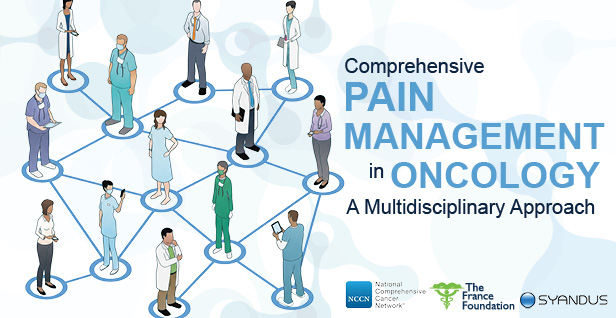
Coming soon!
Cancer pain is a reality for many—affecting one-third of patients during treatment and up to three-fourths with advanced disease. Don’t miss this valuable opportunity to improve your expertise and patient outcomes.
This REMS-compliant CME/CE series is designed to enhance your approach to cancer pain management. Learn how to safely use opioid analgesics, optimize non-opioid and adjuvant treatments, and integrate non-pharmacological methods into your practice.
Top reasons to participate:
- Earn 4.0 REMS-compliant CME/CE credits for physicians, nurses, physician associates, pharmacists, and social workers.
- Stay informed on the FDA Blueprint updates for opioid use.
- Engage with real-world case discussions for actionable insights.
Don’t miss this chance to provide better pain management for your patients!
What you'll learn:
Module 1: Foundations of Cancer-Related Pain
This module introduces the fundamental principles of cancer-related pain, including definitions, pathophysiology, and mechanisms underlying nociceptive, neuropathic, and mixed pain syndromes in oncology. Emphasis is placed on interprofessional roles in comprehensive pain evaluation and early identification of risk factors for substance use disorders.
Module 2: Multimodal Management of Cancer Pain
This module focuses on the development of individualized, multimodal pain management plans for patients with cancer. Content includes non-pharmacologic strategies (eg, psychosocial, physical, and behavioral health approaches), non-opioid analgesics, and indications for opioid therapy with attention to interprofessional collaboration and shared decision-making.
Module 3: Safe and Effective Use of Opioid Analgesics in Cancer Care
This module addresses best practices for the safe initiation, titration, monitoring, and discontinuation of opioid analgesics in the management of acute and chronic cancer-related pain. Learners will review risk mitigation strategies, including monitoring for adverse effects, evaluating functional improvement, and recognizing signs of misuse. The module also covers patient and caregiver counseling on safe use, storage, and disposal and the role of naloxone in overdose prevention.
Module 4: Managing Complexity: Substance Use Disorders and Referral in Cancer Pain
This module will review foundational concepts of OUD, strategies for identifying OUD in patients with cancer, and approaches to management that balance pain control and safety. Indications for referral to pain, palliative care, and addiction specialists are discussed, along with strategies for coordinated, team-based care in complex cases.