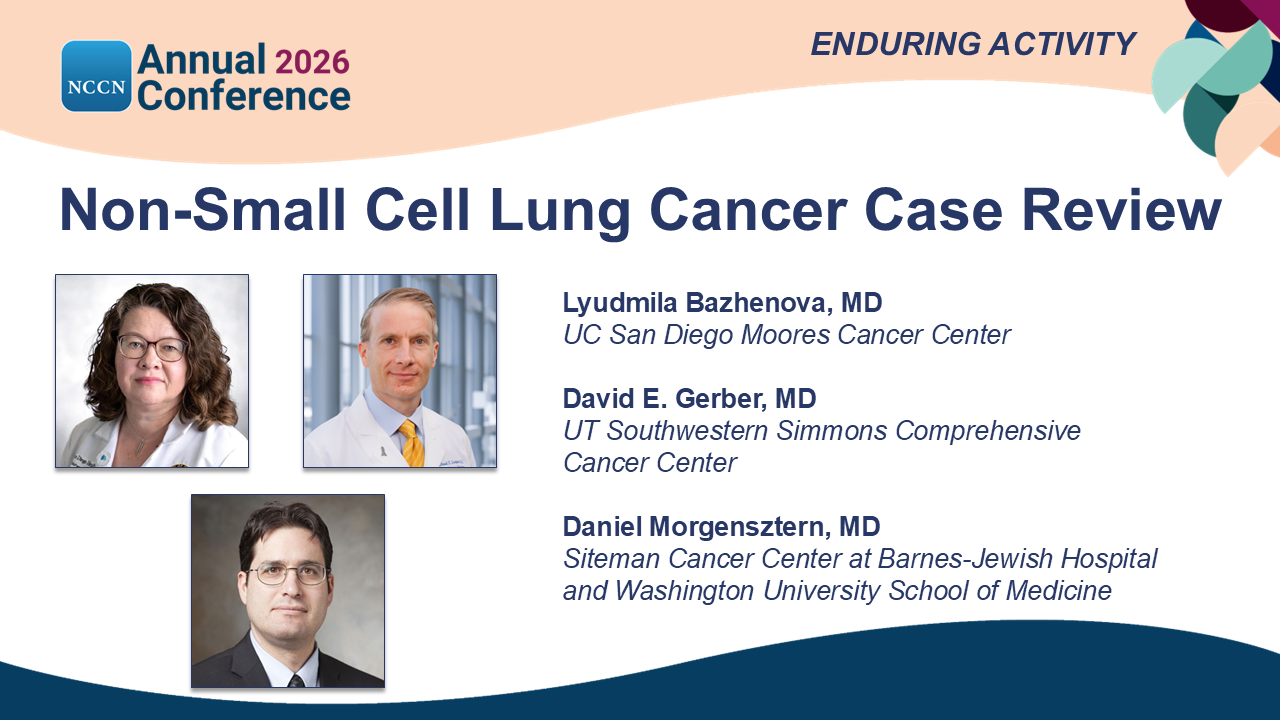
This congress focuses on providing education for the interprofessional oncology care team with practical guidance on the latest updates to the NCCN Guidelines, novel and emerging therapies, recent clinical research, and strategies to align new developments with current standards of care. 

The NCCN Guidelines® Non-Small Cell Lung Cancer are updated frequently throughout the year to include new approved agents and indications. It is difficult for clinicians to stay up-to-date on the most recent recommendations to improve outcomes for their patients with metastatic NSCLC. In addition, clinicians need to be aware of novel adverse reactions that may occur with the new targeted therapies.

This information was originally presented at the NCCN 23rd Annual Conference: Improving the Quality, Effectiveness, and Efficiency of Cancer Care held in Orlando, Florida, from March 22 - 24, 2018.

Due to recent FDA approvals, several types of perioperative systemic therapies are now available for the treatment of resectable non-metastatic non-small cell lung cancer.

NSCLC is a complex disease with many variables to consider for systemic therapy selection, including the rapidly growing number of predictive biomarkers.

Clinicians need to be aware of the most recent recommendations about biomarker testing and the appropriate use of new targeted therapies (including sequencing these therapies, assessing and managing side effects from these therapies), so they can select the most appropriate therapy for their patients with metastatic NSCLC.

Due to recent FDA approvals, several types of perioperative systemic therapies are now available for the treatment of resectable non-metastatic non-small cell lung cancer.

Bruton tyrosine kinase inhibitors (BTKis) and BCL2 inhibitor (BCL2i)–containing regimens significantly improve survival outcomes in patients with chronic lymphocytic leukemia/small lymphocytic lymphoma (CLL/SLL).

The NCCN Clinical Practice Guidelines in Oncology (NCCN Guidelines) for Genetic/Familial High-Risk Assessment: Breast, Ovarian, Pancreatic, and Prostate are intended to serve as a resource for health care providers to identify individuals who may benefit from cancer risk assessment and genetic co

The NCCN Clinical Practice Guidelines in Oncology (NCCN Guidelines) for Small Cell Lung Cancer provide recommendations for diagnostic workup, staging, and treatment.

Pages

Subscribe to RSS - Lung Cancers